
I spent part of last night cleaning up Wikipedia articles about baseball leagues, teams, and their histories. This morning, the league the Mississippi Mud Monsters play in officially changed its name.
Excellent timing on my part.
To be fair, we've known this was coming since April, but as of today, the Frontier League is officially the National Association of Professional Baseball, or NAPB. For our Canadian friends, it's the Association nationale de baseball professionnel, or ANBP.
We're going to have to get used to a few new letters around here.
The new identity comes with some other changes, too. Yesterday, the league announced that the Kane County Cougars and Cleburne Railroaders intend to join us for the 2027 season, bringing the planned membership to 20 teams. We've also got a new conference and divisional alignment, which means the Mud Monsters will have a new divisional opponent next year.
Rather than simply share a couple of announcements, I thought this would be a good opportunity to introduce you to the league we call home.
I've spent about 20 years working in professional baseball, including quite a few in independent baseball, and one of the things I've always appreciated about this business is that there's a story behind just about everything. Sometimes it's an incredible baseball accomplishment. Sometimes it's an unexpected friendship. Occasionally, it's a story about a baseball executive who may have received a traffic ticket from the league's current director of umpires.
We'll get to that.
First, though, let's talk about a baseball league that almost didn't survive its first two weeks.
From six surviving teams to 20
During the winter of 1992 and 1993, a group of businessmen got together with an idea. They wanted to bring professional baseball to smaller communities in West Virginia, eastern Kentucky, and southeastern Ohio, particularly places that weren't likely to attract affiliated Minor League Baseball franchises.
They called their new organization the Frontier League, and eight teams began play on June 30, 1993.
Things got interesting pretty quickly.
Within the first two weeks, the Tri-State Tomahawks and West Virginia Coal Sox had both folded. The remaining six ownership groups had to figure out how to keep the league alive long enough to finish its inaugural season.
I have a tremendous amount of respect for anyone willing to own a professional baseball team. Having a quarter of your league disappear before the season is two weeks old would probably be enough to make most people reconsider their investment.
Somehow, the remaining owners kept going. The Zanesville Greys won the first championship, and everyone started making plans for another season.
I'm glad they did. Otherwise, I might have had to find a real job.
In 1994, the league hired Bill Lee as its first full-time commissioner. Lee would spend nearly three decades leading the organization, helping it find more stable markets, improve its facilities, and establish itself in the professional baseball landscape.
The Frontier League gradually expanded beyond the Ohio Valley, entering larger metropolitan markets and eventually crossing the Canadian border when the London Werewolves began play in Ontario in 1999.
In 2019, it announced a merger with the Canadian American Association of Professional Baseball, better known as the Can-Am League, bringing several northeastern franchises into the organization.
The 2020 season was canceled because of the pandemic, but the league returned in 2021 as an official Partner League of Major League Baseball.
That partnership is an important part of what we do. Independent teams aren't assigned players by a particular MLB franchise, as affiliated minor league clubs are. We assemble our own rosters, sign our own players, and provide opportunities for them to continue developing and pursuing their professional careers.
There are players getting their first opportunity in professional baseball, players who have been released by affiliated organizations, and veterans who aren't quite ready to hang up their spikes.
Major League organizations can acquire the contracts of players they're interested in. In 2025 alone, 26 Frontier League players had their contracts acquired by MLB organizations. Of those 26, 22 had never played professionally outside the Frontier League.
The league has grown on the business side, too. Nearly 1.9 million fans attended Frontier League games in 2025, setting a league-wide attendance record for the fourth consecutive season.
And, of course, that growth eventually brought the league to Mississippi.
On September 9, 2024, the Frontier League announced that professional baseball would continue at Trustmark Park following the departure of the Mississippi Braves. The Mud Monsters became the league's 17th franchise, with the Down East Bird Dawgs in Kinston, North Carolina, announced as the 18th just eight days later.
Both clubs began play in 2025.
By then, the Frontier League had become a very different organization from the one that nearly folded in the summer of 1993. And its leadership had begun considering whether the name still fit.
So, why the new name?
When the Frontier League was founded, its geographic footprint was small enough that the name made perfect sense.
Thirty-three years later, we've got teams in Canada, Texas, Massachusetts, and just about everywhere in between. At some point, I suppose someone looked at a map and realized we'd run out of frontier.
There's a little personal symmetry in all of this, too.
I'm an Ohio-born guy who had to leave Ohio to become everything I could be. In a way, the league did the same thing. Its roots are in the Ohio Valley, and its headquarters are still in Avon, Ohio, but it had to grow well beyond where it started.
Neither of us has forgotten where we came from. We've just found some pretty good things outside the Buckeye State.
The league's rebranding process began in the fall of 2024, when its Board of Directors formed a strategic planning committee to evaluate where the organization stood and where it wanted to go.
The new identity was developed with BLDG, a creative agency based in Covington, Kentucky, that previously worked on the Florence Y'alls rebrand and the Windy City ThunderBolts' brand refresh.
The name National Association of Professional Baseball also has some historical significance. The original National Association of Professional Baseball Leagues was established in 1901 and eventually became the organization historically associated with Minor League Baseball. Today's NAPB isn't a continuation of that original organization, but the new name deliberately draws on that history.
The visual identity features an NA monogram with a traditional baseball pennant and includes French-language versions for the Canadian markets.
 Frontier League
Logo used from 2022 to 2026
Frontier League
Logo used from 2022 to 2026
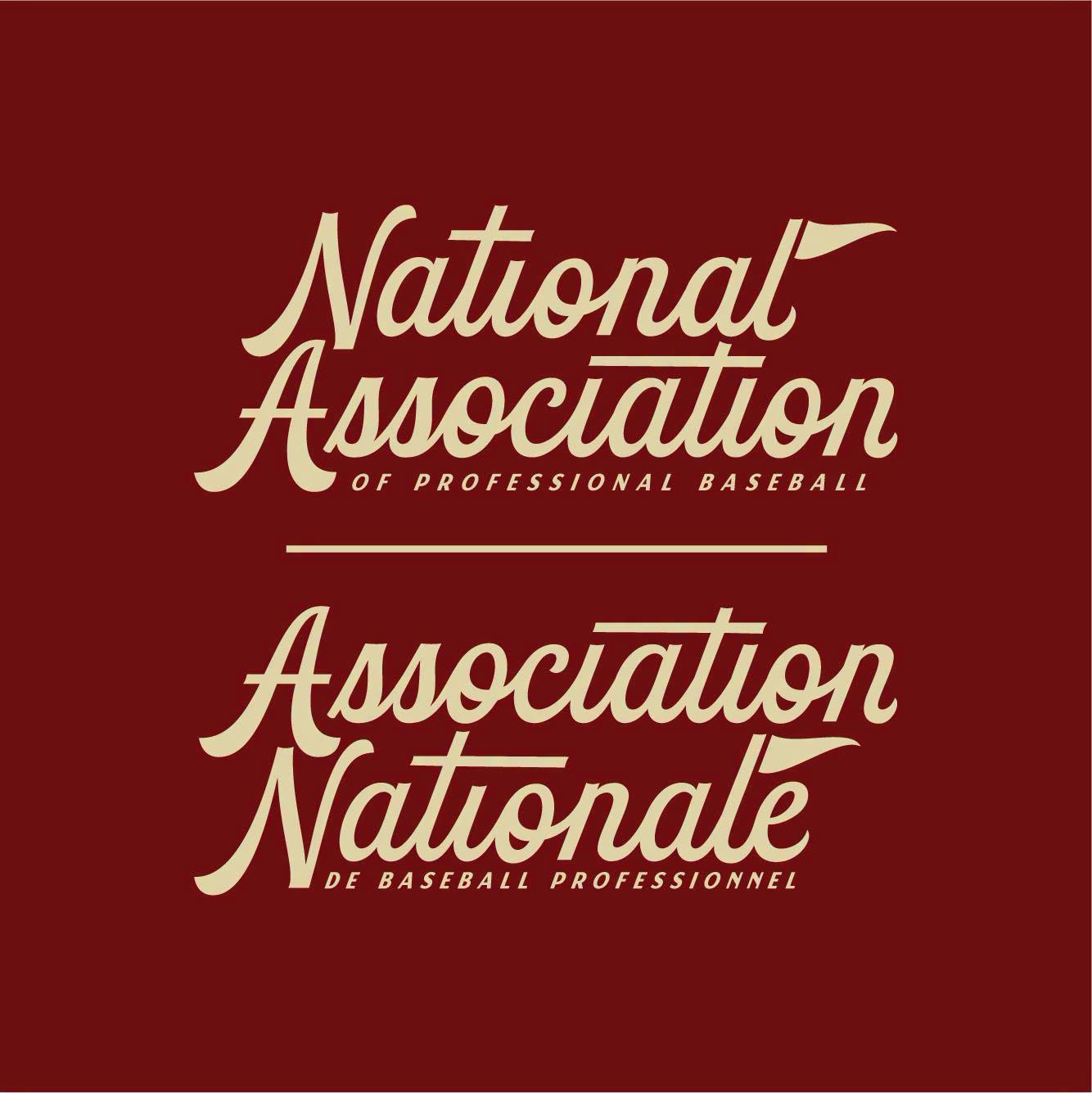 National Association of Professional Baseball
Introduced October 1, 2026
National Association of Professional Baseball
Introduced October 1, 2026
The new brand is built around the idea of North America's Home Teams.
I like that concept because it recognizes something that's easy to overlook when you're talking about a league that covers so much territory. Our franchises might share a league, but each one belongs to its own community. What works in Québec isn't necessarily what works in Pearl, Mississippi, and that's perfectly fine. The differences are part of what makes the league interesting.
The name and branding are changing, but the organization itself isn't starting over. Its history, records, championships, and individual team histories will all continue under the new identity.
Our first two seasons will always have been played in the Frontier League. Our third will be played in the NAPB. And I fully expect to accidentally call it the Frontier League at least a dozen times next season.
Meet the people who keep this thing running
One of the things fans don't see very often is the amount of work required to operate a professional baseball league. There are schedules to coordinate, rules to enforce, player transactions to process, umpires to assign, and about a thousand other things that have to happen before anyone can play baseball.
The NAPB has a relatively small permanent administrative staff responsible for overseeing all of that across its franchises. I've gotten to know these folks over the past couple of years, and I think they're worth introducing. They're also a good reminder that the people behind the job titles are often considerably more interesting than their biographies suggest.
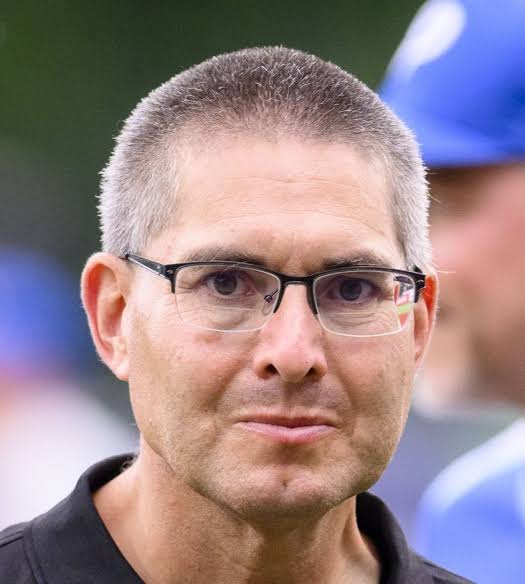
Steve Tahsler
Steve is in his 30th season with the organization and became commissioner in 2023 after spending 14 years as deputy commissioner. Before moving into league administration, he served as general manager of four Frontier League franchises, including Evansville and Windy City. His teams won three consecutive championships from 2006 through 2008. His career even includes working on the baseball results staff at the 1996 Olympic Games in Atlanta.
Steve has been around this league long enough that I suspect he remembers things the league itself has forgotten. He's also been a general manager, which means he knows what it's like to be on the other end of a phone call from the commissioner's office.
When Mississippi was announced as an expansion market in 2024, he pointed to the state's baseball culture and the national championships won by Mississippi State and Ole Miss. He talked about giving players with Mississippi connections opportunities to continue their professional careers close to home while showcasing themselves to Major League organizations.
As it turns out, our very first player signing was Brayland Skinner, who helped Mississippi State win its 2021 national championship. Then, in 2026, fellow national champion Preston Johnson became our Opening Day starting pitcher. He struck out eight batters in six scoreless innings against Gateway. After two starts with the Mud Monsters, he had his contract purchased by the Minnesota Twins organization.
I'd say that's a pretty good example of the opportunity Steve was talking about.
But there's something else I appreciate about Steve that has absolutely nothing to do with running a baseball league. He's originally from Bay Village, Ohio, and he understands what Stadium Mustard means to a kid from Northeast Ohio.
If you grew up in that part of the country, you know Stadium Mustard is considerably more than a condiment. It's part of the experience of going to a ballgame, and one of those little things that can immediately make a place feel like home. Steve knows that, and he's made sure Stadium Mustard finds its way to me when he visits.
I'm not sure keeping my mustard supply stocked is technically part of the commissioner's job description, but it's certainly appreciated.
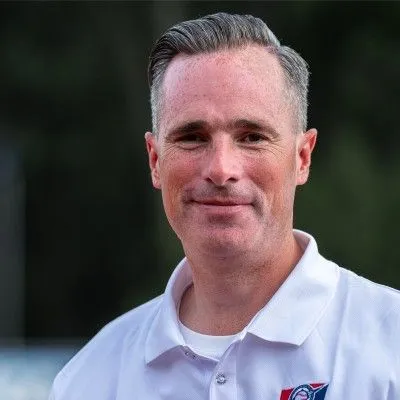
Matt “Shep” Shepardson
Shep joined the league office after spending three seasons overseeing baseball operations for the Joliet Slammers. He also served as their interim manager in 2023 and was named the Frontier League's Coach of the Year. He's an accomplished audio and video producer, has experience in analytics and technology, and brings a wide range of skills to the league office.
All of that is impressive, but I would argue that his greatest accomplishment happened in Pearl.
During one of his visits, Shep joined us for Music Bingo at Team Ten, a place that was a regular Wednesday night stop for Holly and me before it closed. Shep is apparently a walking Name That Tune machine.
I consider myself pretty good at Music Bingo, but watching him play was almost offensive. I'm fairly certain he could identify a song from the sound of someone plugging in an electric guitar.
I miss Team Ten, but I do not miss competing against Shep.
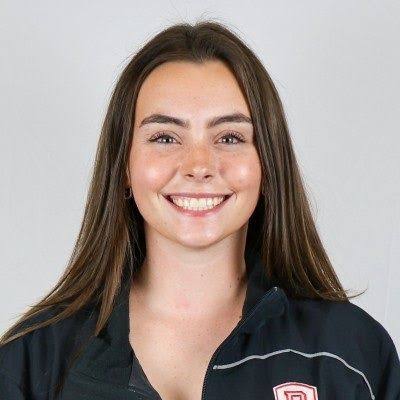
Sarah George
Sarah joined the league ahead of the 2025 season and has quickly become an important part of its digital storytelling and photography. She's a Bradley University graduate pursuing a master's degree at Northwestern. Her background includes work with the Peoria Chiefs, Normal CornBelters, Chicago White Sox, and Chicago Stars FC.
If you've ever been at a league event and wondered how someone managed to photograph seemingly everything that happened, there's a good chance Sarah was responsible. She's a bit of a photography ninja. She always seems to be in the right place at the right time, and I genuinely don't know how she manages to cover as much ground as she does.
She's also a big Taylor Swift fan. I know this because we once managed to turn a trip through a Tim Hortons drive-through into a lengthy discussion about Taylor Swift.
I don't remember how we got on the subject, but I do remember that we had quite a bit to say about it.

Kevin Furman
Kevin just completed his first season as the league's director of umpires after being named Umpire of the Year in three consecutive seasons, from 2023 through 2025. He's also a retired law enforcement supervisor from Merrillville, Indiana, where he spent part of his career as a SWAT operator and hostage negotiator.
I imagine that experience comes in handy when dealing with baseball managers who disagree with a call.
There's also a possibility that Kevin gave me a traffic ticket at some point during my years working for the Gary SouthShore RailCats. Neither of us can confirm that, and I'm not particularly interested in reopening the investigation.
I'm just glad we're on the same side of professional baseball these days.
Twenty teams, four divisions, and some questionable geography
With the addition of Kane County and Cleburne, the NAPB will have 20 teams competing in two conferences and four divisions beginning in 2027. The Atlantic Conference will have North and East divisions, while the Midwest Conference will have Central and West divisions.
Here's how the new alignment breaks down:
Atlantic Conference
North Division
- Brockton Rox
- Ottawa Titans
- Québec Capitales
- Trois-Rivières Aigles
- Tri-City ValleyCats
East Division
- Down East Bird Dawgs
- New Jersey Jackals
- New York Boulders
- Sussex County Miners
- Washington Wild Things
Midwest Conference
Central Division
- Evansville Otters
- Florence Y’alls
- Kane County Cougars
- Lake Erie Crushers
- Schaumburg Boomers
West Division
- Cleburne Railroaders
- Gateway Grizzlies
- Joliet Slammers
- Mississippi Mud Monsters
- Windy City ThunderBolts
That's 20 teams spread across 11 American states and two Canadian provinces.
It's a pretty substantial geographic footprint, and I have a few thoughts about how we've arranged it. Schaumburg and Kane County are in the Central Division. Joliet and Windy City are in the West Division. All four teams are in the greater Chicago area.
I'll leave the finer points of that geography to whoever came up with the divisions.
The distances between those clubs are also a little deceptive. Kane County and Schaumburg play in ballparks separated by roughly 23 miles. You can get from one to the other in about 40 minutes, assuming Chicago-area traffic cooperates.
You could catch a day game in Schaumburg, stop at IKEA for some Swedish meatballs, and still make it to Kane County for an evening game.
Don't ask me how I know this.
At the other extreme, Cleburne and Québec City are separated by approximately 2,000 miles of highway and an international border. Those are two very different bus rides.
For the Mud Monsters, Cleburne will be a new divisional opponent and another potential road destination for our fans. It's approximately seven hours from Pearl, which is a perfectly reasonable drive for some baseball fans and an absolutely unreasonable drive for others.
Our new division also has one interesting geographic advantage: all five clubs are in the Central Time Zone. It's a small victory, but when you're dealing with a league this geographically spread out, I'll take it.
And while we're talking about unusual geography, consider the Gateway Grizzlies. They play in Sauget, Illinois, a small village across the Mississippi River from St. Louis. According to the 2020 census, Sauget had a population of just 141 people.
The ballpark can accommodate several thousand fans. There are nights when the number of people inside the stadium is considerably larger than the population of the entire village. I think that's pretty fantastic.
Of course, there's a considerable difference between looking at distances on a map and actually moving a professional baseball team. Baseball travel involves equipment, luggage, players, coaches, hotel arrangements, meals, and a schedule that doesn't always leave much room for things to go wrong.
Having worked in independent baseball for a long time, I've developed a tremendous appreciation for a good bus driver, a well-organized road trip, and a hotel that actually has all the rooms you reserved. I've also learned that sometimes the best thing you can do is accept that it's going to be a long night.
But the travel is also one of the things I genuinely enjoy about this business. I've been fortunate enough to see a lot of places through baseball that I might never have visited otherwise. And last fall, one of those trips turned out to be particularly meaningful.
A little bit of home, somewhere in Canada
In September 2025, I traveled to Ottawa for our annual league meetings. I flew into Montréal and made the drive to Ottawa along the Trans-Canada Highway. I was looking forward to the drive almost as much as the meetings themselves, partly because I'd never visited that part of Canada and partly because I genuinely enjoy a good road trip.
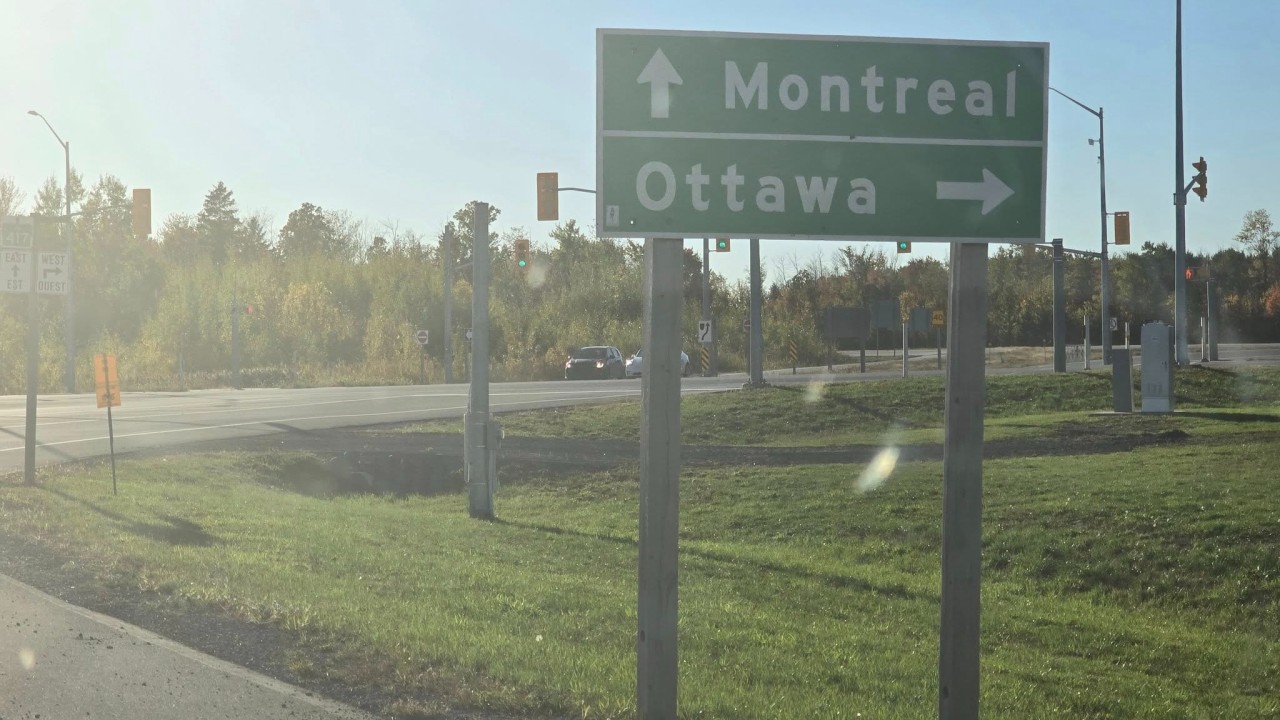
What surprised me was how familiar everything felt. There were stretches of farmland that reminded me of Indiana, where I'd spent years working in baseball. Other parts of the drive brought back memories of Arkansas and Mississippi.
I remember looking around and realizing how much the scenery reminded me of places I'd called home, despite the fact that I was traveling through a country I'd never visited before. I stopped for a few pictures along the way, including one taken rather hastily as I crossed from Québec into Ontario.
I've lived in several states and called a lot of places home over the years. That drive reminded me that sometimes you recognize pieces of those places somewhere entirely new.
And I ended up falling a little bit in love with Ottawa, too. The history, architecture, and character of the city were wonderful, and I enjoyed having the opportunity to explore a place I'd previously known mostly through baseball.
During the meetings, I also had the opportunity to present the story of how we built the Mud Monsters to the other organizations in the league. There was something pretty special about standing in Canada, talking to colleagues from across North America about a baseball team we'd created in Pearl, Mississippi.
I came home with a few new ideas, some great memories, and a much greater appreciation for the community the Ottawa Titans represent.
I also spent some time thinking about Ottawa Stadium. It's a big ballpark. Really big, particularly by independent baseball standards.
When you work in this business, it's hard to walk into a stadium without immediately thinking about how you'd operate it. You start looking at the seating capacity, the concourses, the group areas, and all the little things that contribute to the experience. I remember considering the challenge of creating a great atmosphere in a stadium that large. It takes a lot of people to fill a place like that.
Well, the Titans apparently took that as a challenge.
On May 8, 2026, Ottawa sold 10,278 tickets for its home opener, establishing a new Frontier League single-game attendance record. Then, on September 25, the Titans sold 10,303 tickets for Game 3 of the Frontier League Championship Series against Evansville, setting a new single-game playoff attendance record across MLB's Partner Leagues.
And they weren't finished. The following night, Ottawa defeated the Evansville Otters, 4-0, to win the championship series in four games and capture the first title in franchise history.
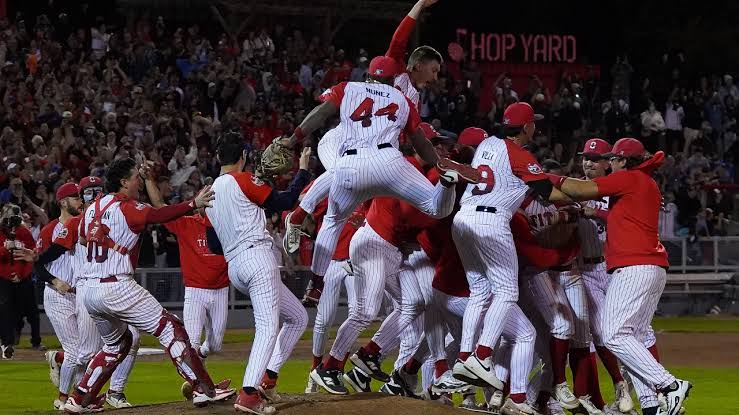
In doing so, the Titans became the final champions of the Frontier League before its transition to the NAPB. I can't think of a much better way to close out that chapter of the league's history.
And having stood in that ballpark a year earlier, wondering what it would take to fill it, I have an even greater appreciation for what the Titans accomplished.
It turns out that sometimes a stadium feels too big until it doesn't.
A few things you probably didn't know
I've been digging through the Frontier League's historical records, and I'm beginning to understand why the people who have been around this organization for decades have so many stories. There have been some remarkable accomplishments, some unusual situations, and at least one championship that probably could have used a better weather forecast.
In 1994, Kendra Hanes appeared in 10 games for the Kentucky Rifles, becoming one of the pioneering women in modern professional baseball.
In June 2000, former Chillicothe Paint pitcher Brian Tollberg became the first Frontier League alumnus to reach Major League Baseball when he debuted with the San Diego Padres. Six days later, Morgan Burkhart made his debut with the Boston Red Sox and recorded a hit in his first major league at-bat against Mike Mussina.
But if we're talking about individual performances, Brett Gray deserves a little extra attention. On June 3, 2000, the London pitcher struck out 25 batters in a nine-inning game. Of the 27 outs his team needed to record, Gray handled 25 of them himself.
I'm not sure what the defense did to stay entertained that night, but I imagine they had plenty of time to think about it.
The performance attracted national attention, memorabilia from the accomplishment made its way to the National Baseball Hall of Fame in Cooperstown, and the Cincinnati Reds signed Gray two days later.
There was also the 2002 Frontier League All-Star Game in Kalamazoo, which ended in a tie and was decided by a Home Run Derby. River City's Brody Jackson hit the winning home run, and the moment was featured on ESPN's SportsCenter the following night.
Then there's the 2008 championship series between Kalamazoo and Windy City. Storms left Kalamazoo's Homer Stryker Field under more than three feet of water, forcing the league to relocate the series to Windy City's ballpark.
I've dealt with my share of difficult field conditions, but I'm happy to report that I've never had to relocate a championship series because the ballpark turned into a swimming pool. Windy City ultimately swept the series to win its second consecutive championship.
And on August 31, 2013, the Joliet Slammers used six different pitchers to throw a 10-inning no-hitter. Six pitchers. Ten innings. Zero hits. According to the league's historical records, it was believed to be the first time six pitchers had combined to accomplish that in professional baseball.
One of my favorite stories, though, comes from the 2021 season. Because the U.S.-Canada border remained closed during the pandemic, the league's three Canadian franchises couldn't operate normally. Players from Ottawa, Québec, and Trois-Rivières were brought together to form a combined team called Équipe Québec.
They spent the first half of the season entirely on the road before finally returning to Canada for home games. Imagine trying to operate a professional baseball team when your roster comes from three different organizations, you're playing an extended road trip, and you're not entirely sure when you'll be able to go home.
Oh, and they still managed to win their division. That's the kind of resourcefulness that has kept independent baseball going for decades.
There are plenty of other stories in the league's history, too. Broadcaster Jason Benetti began his professional broadcasting career with the Windy City ThunderBolts before going on to become one of the most recognizable voices in Major League Baseball.
And in 2009, Lake Erie pitcher Josh Faiola spent his season living in an assisted-living facility in Westlake, Ohio, an arrangement so unusual that ESPN documented the experience.
I'm fairly certain we could fill an entire website with stories like these. Actually, now that I think about it, maybe we should.
Two new neighbors and a very familiar face
That brings us back to this week's other big announcement. The Kane County Cougars and Cleburne Railroaders intend to join the NAPB from the American Association of Professional Baseball, and both clubs bring some interesting history of their own.
Kane County began play in 1991 and spent three decades in affiliated Minor League Baseball before joining the American Association in 2021. Over the years, the Cougars have helped develop an impressive group of Major League players, including Miguel Cabrera, Josh Beckett, Adrian Gonzalez, Nelson Cruz, Kyle Schwarber, and Willson Contreras.
Three former Cougars, Schwarber, Contreras, and Albert Almora Jr., were members of the Chicago Cubs' 2016 World Series championship team.
As a Cleveland Indians fan who was living in the Calumet Region outside Chicago in 2016, it hurt me to type that sentence.
They've also been pretty successful lately, winning consecutive American Association championships in 2024 and 2025. In March 2026, they traveled to Mexico City and won the Baseball Champions League Americas, defeating the Diablos Rojos del México in the championship game. That's quite a résumé for one of our new league members.
Cleburne's story goes back even further, at least in terms of its name. The original Cleburne Railroaders won the Texas League championship in 1906. The modern franchise revived that historic identity when it began play in 2017.
The Railroaders play at La Moderna Field in Cleburne, southwest of Fort Worth, and their arrival will establish the NAPB's first franchise in Texas. Their ballpark is also the most recently constructed facility in the league's newly announced lineup, having opened in 2017.
For comparison, the Evansville Otters play at historic Bosse Field, which opened in 1915. It's the third-oldest ballpark still in regular use for professional baseball in the United States, behind Fenway Park and Wrigley Field. Movie fans might recognize it from A League of Their Own, which used Bosse Field as the home of the Racine Belles.
There's something I really enjoy about the fact that a league can include a ballpark that's more than a century old and another that opened less than a decade ago. Both have their own character, and both contribute something different to the experience of professional baseball.
But back to our new neighbors. Both Kane County and Cleburne are owned by REV Entertainment, the official sports and entertainment company of the Texas Rangers, which also owns the Schaumburg Boomers.
And if you've spent much time around independent baseball, you probably already know that it's a remarkably small world. I'm pretty sure you could connect almost anyone in the industry to anyone else through about three former coworkers, two baseball teams, and somebody who used to work in Gary, Indiana.
In this case, that person is Brian Lyter.
Brian became REV Entertainment's Vice President of Sports Management earlier this year, overseeing Kane County, Cleburne, Schaumburg, and other sports properties in the company's portfolio. He and I go back quite a few years. We worked together with the Gary SouthShore RailCats, where he eventually became the team's president.
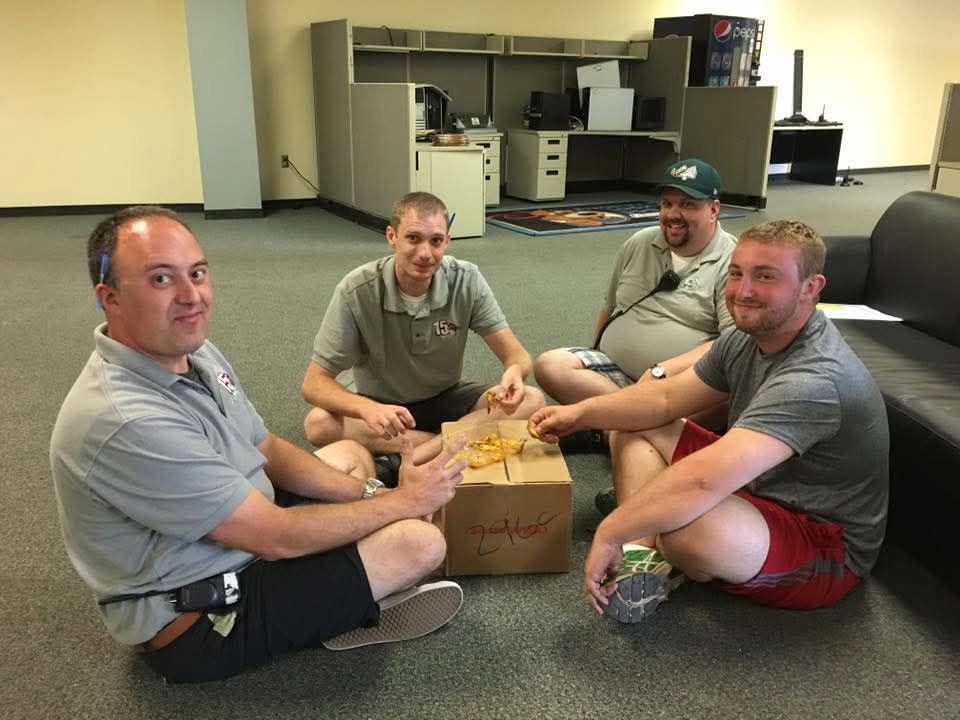
He's come a long way since the days when our crew in Gary sat on the floor around a cardboard box, sharing a plate of nachos because the office furniture had mysteriously disappeared.
That's minor league baseball for you. Sometimes you've got a great office. Sometimes you've got a cardboard box and some nachos. You make it work.
Over the years, Brian became much more than a colleague. He's been a friend, a mentor, and someone who has played an important role in several of the opportunities that brought me to where I am today.
When I had the opportunity to leave Gary for the Mississippi Braves, Brian made me an offer to stay. I ultimately chose Mississippi because it brought me closer to family. Before I left, he told me we'd work together again. Years later, that's exactly what happened.
When the Mississippi Braves announced their departure from Trustmark Park, Brian was instrumental in bringing together the people and resources necessary to establish a new professional baseball franchise in Pearl.
Alongside owner Joe Eng and the rest of the founding leadership, he helped take what was initially called On Deck 2025 and turn it into the Mississippi Mud Monsters. I had the opportunity to work alongside him again as we built the organization, and I'm grateful for the role he played in making all of this possible.
Now Brian is at REV, overseeing three franchises that will compete in the NAPB next season. Kane County and Schaumburg will compete against each other in the Central Division, while Cleburne will be one of our new divisional opponents in the West.
It's funny how things work out. The guy I once shared nachos with on the floor in Gary is now overseeing three of the teams we'll be competing against.
I'm looking forward to seeing Brian and the REV crew around the league next season. I think we might even have to bring back the Burger Mile.
Although, for the record, I'd still prefer that we beat his teams.
A new chapter for Mississippi, too
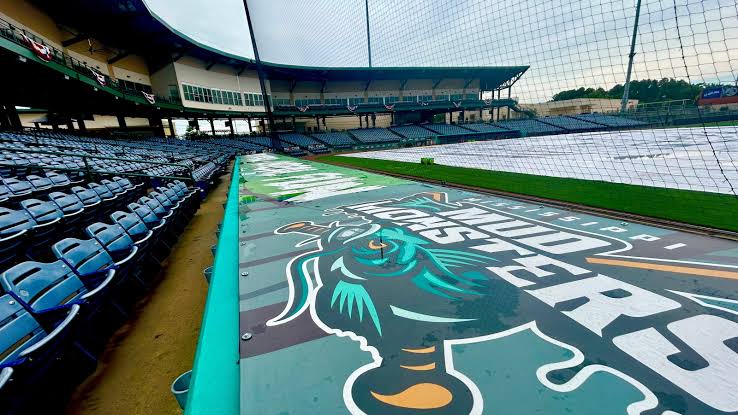
When the Mud Monsters were announced in September 2024, we didn't even have a team name. We were literally called On Deck 2025 while we worked with the community to figure out what Mississippi's new professional baseball team should be.
More than 5,600 people participated in the naming process, ultimately choosing Mississippi Mud Monsters over Mississippi Grits and Mississippi Soul Shakers.
We revealed the identity, introduced the logos, started building our staff, hired a manager, assembled a roster, and did all the other things necessary to turn a baseball concept into an actual team. On May 8, 2025, we finally played our first game at Trustmark Park.
Now, after two seasons, we're preparing for our third year with a new league identity, two new members, and a different divisional alignment.
Fortunately, we don't have to go through another team-naming contest. We're still the Mississippi Mud Monsters. Fish is still Fish, Trustmark Park is still our home, and we're still going to do our best to make professional baseball a little weird. We'll just have a different name at the top of the standings.
We're also still a young organization with plenty left to accomplish, but we've already become part of a league with more than three decades of history.
One of the things I appreciate most about this business is that it gives people opportunities. Players get a chance to continue their careers. Staff members develop skills and build relationships that can take them places they never expected. Families create memories together, and communities find something they can call their own.
Sometimes those opportunities come in unexpected ways. A kid from Northeast Ohio ends up working in professional baseball in Indiana, moves to Mississippi, helps start a new team, and eventually becomes its general manager.
Along the way, he meets people who become mentors, colleagues, and friends. Some of them end up running the league. Some end up running other teams. And some turn up in unexpected places years later, usually with a few more stories to tell.
I think about that when I consider the people who helped establish this franchise, the staff who have worked so hard over our first two seasons, and the fans who have embraced an idea that didn't even have a name just two years ago.
We have plenty of work left to do in Mississippi. There are things I want us to do better, experiences I want us to create, and relationships I want us to strengthen. Having the opportunity to lead this team as we enter our third season is something I take pretty seriously.
But I'm also looking forward to seeing what happens across the larger league. The organization that started with eight teams in 1993 has survived financial difficulties, franchise relocations, mergers, a canceled season, and all the other challenges that come with running professional baseball.
I'm fairly certain none of those original owners imagined that their little baseball league would eventually include 20 teams, three Canadian franchises, a club in Texas, and a team called the Mississippi Mud Monsters.
But here we are. There are new places to visit, new opponents to meet, and quite a few more stories waiting to happen.
And if this league has taught me anything, it's that the stories are usually pretty good.
Now, if you'll excuse me, I apparently have a few more Wikipedia pages to update.